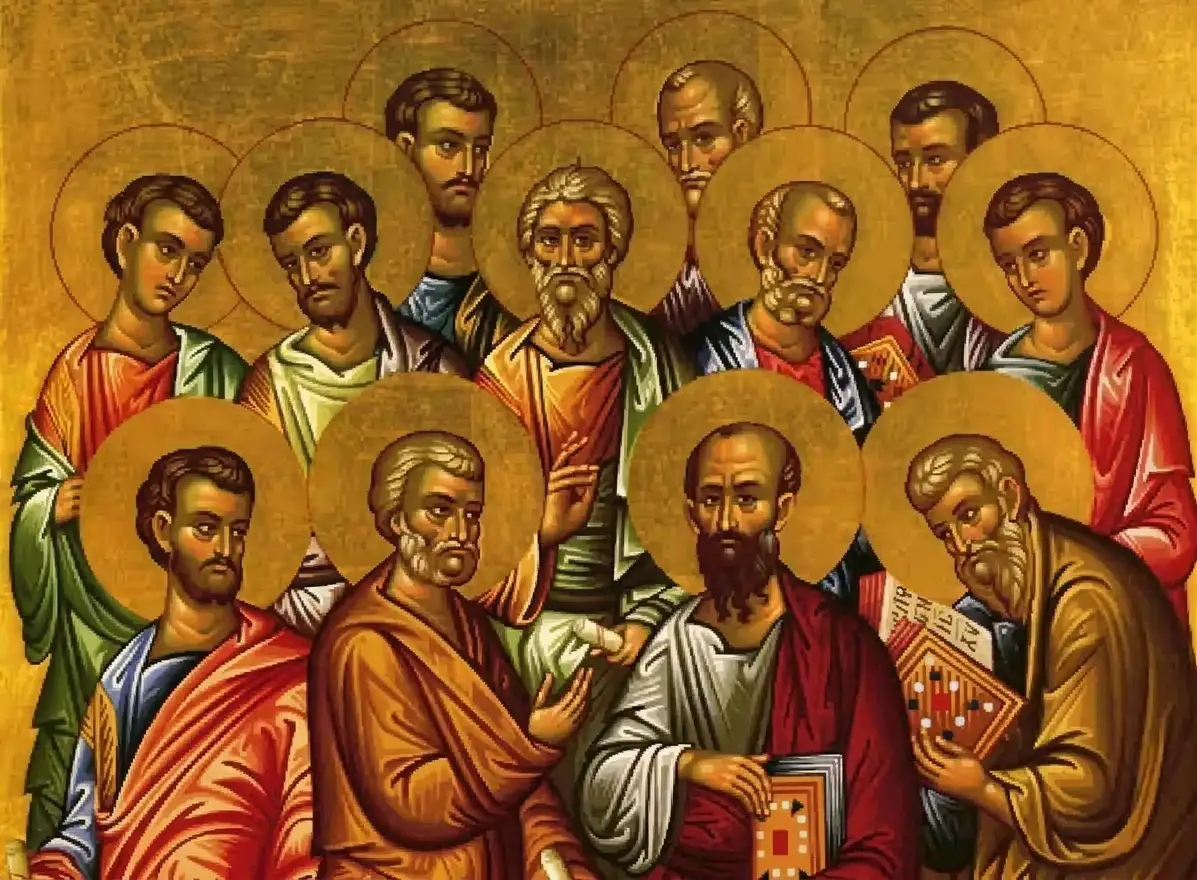
Saint Cyril, Archbishop of Alexandria, a distinguished champion of Orthodoxy and a great teacher of the Church, came from an illustrious and pious Christian family. He studied the secular sciences, including philosophy, but most of all he strove to acquire knowledge of the Holy Scriptures and the truths of the Christian Faith. In his youth Cyril entered the monastery of Macarius in the Nitreia hills, where he stayed for six years. Theophilus (385-412), the Patriarch of Alexandria, ordained him as a deacon, numbered him among the clergy and entrusted him to preach.
Upon the death of Patriarch Theophilus, Cyril was unanimously chosen to the patriarchal throne of the Alexandrian Church. He led the struggle against the spread of the Novatian heresy in Alexandria, which taught that any Christian who had fallen away from the Church during a time of persecution, could not be received back into it.
Cyril, seeing the futility of admonishing the heretics, sought their expulsion from Alexandria. The Jews appeared a greater danger for the Church, repeatedly causing riots, accompanied by the brutal killing of Christians. The saint long contended with them. In order to wipe out the remnants of paganism, the saint cast out devils from an ancient pagan temple and built a church on the spot, and the relics of the Holy Unmercenaries Cyrus and John were transferred into it. A more difficult struggle awaited the saint with the emergence of the Nestorian heresy.
Nestorius, a presbyter of the Antiochian Church, was chosen in 428 to the see of Constantinople and there he was able to spread his heretical teaching against the dogma about the uncommingled union of two natures in the Person of the Lord Jesus Christ. Nestorius called the Mother of God not the Theotokos, but rather Christotokos or “Birth-giver of Christ,” implying that she gave birth not to God, but only to the man Christ. The holy Patriarch Cyril repeatedly wrote to Nestorius and pointed out his error, but Nestorius continued to persevere in it. Then the saint sent out epistles against Nestorianism to the clergy of Constantinople and to the holy emperor Theodosius the Younger (408-450), denouncing the heresy. Cyril wrote also to other Churches, to Pope Celestine and to the other Patriarchs, and even to monks of several monasteries, warning of the emergence of a dangerous heresy.
Nestorius started an open persecution against the Orthodox. In his presence one of his partisans, Bishop Dorotheus, pronounced an anathema against anyone who would call the Most Holy Virgin Mary the Theotokos.
Nestorius hated Cyril and brought out against him every kind of slander and fabrication, calling him a heretic. The saint continued to defend Orthodoxy with all his powers. The situation became so aggravated, that it became necessary to call an Ecumenical Council, which convened in the city of Ephesus in the year 431. At the Council 200 bishops arrived from all the Christian Churches. Nestorius, awaiting the arrival of Bishop John of Antioch and other Syrian bishops, did not agree to the opening of the Council. But the Fathers of the Council began the sessions with Cyril presiding. Having examined the teaching of Nestorius, the Council condemned him as a heretic. Nestorius did not submit to the Council, and Bishop John opened a “robber council”, which decreed Cyril a heretic. The unrest increased. By order of the emperor, Patriarch Cyril of Alexandria and Archbishop Memnon of Ephesus were locked in prison, and Nestorius was deposed.
Soon Saints Cyril and Memnon were freed, and the sessions of the Council continued. Nestorius, not submitting himself to the determinations of the Council, was deprived of priestly rank. By order of the emperor he was sent to the faraway place Sasim in the Libyan wilderness, where he died in grievous torments. His tongue, having blasphemed the Mother of God, was overtaken by punishment -- in it there developed worms. Even Bishop John of Antioch and the remaining Syrian bishops signed the decrees of the Council of Ephesus.
Cyril guided the Alexandrian Church for 32 years, and towards the end of his life the flock was cleansed of heretics. Gently and cautiously Cyril approached anyone, who by their own simpleness and lack of knowledge, fell into false wisdom. There was a certain Elder, an ascetic of profound life, who incorrectly considered the Old Testament Priest Melchizedek to be the Son of God. Cyril prayed for the Lord to reveal to the Elder the correct way to view the righteous one. After three days the Elder came to Cyril and said that the Lord had revealed to him that Melchizedek was a mere man.
Cyril died in the year 444, leaving behind many works. In particular, the following ought to be mentioned: commentaries On the Gospel of Luke, On the Gospel of John, On the Epistles of the Apostle Paul to the Corinthians and to the Hebrews; also an Apologia in Defense of Christianity against the Emperor Julian the Apostate (361-363). Of vast significance are his Five Books against Nestorius; a work on the Most Holy Trinity under the title Thesaurus, written against Arius and Eunomios. Also two dogmatic compositions on the Most Holy Trinity, distinguished by a precise exposition of the Orthodox teaching on the Procession of the Holy Spirit. Cyril wrote Against Anthropomorphism for several Egyptians, who through ignorance depicted God in human form. Among Cyril’s works are also the Discussions, among which is the moving and edifying Discourse on the Exodus of the Soul, inserted in the Slavonic “Following Psalter”.
Today we commemorate the repose of this great Father of the Church. He is also remembered on January 18, the date of his flight from Alexandria.
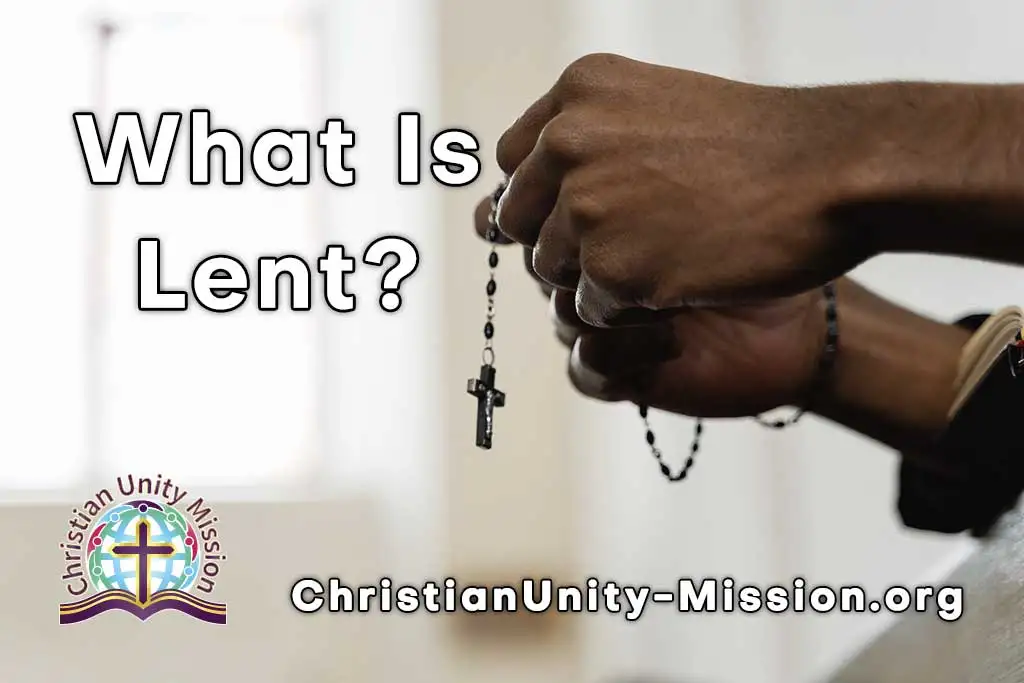
We will read the Gospel of Mathew, chapter four, verses one to two, “Then Jesus was led up by the Spirit into the wilderness to be tempted by the devil. And he fasted forty days and forty nights, and afterward he was hungry.” (Mathew 4:1-2.)
Lent is forty days leading up to the celebration of the resurrection of Jesus, which is “Easter.” The length of Lent represents the forty days Jesus spent fasting in the wilderness before beginning His ministry. The question that always comes to our minds is, why did Jesus fast? The Gospel says that after Jesus’ baptism, He was Led by the Holy Spirit to go into the wilderness to be tempted by Satan. Jesus fasted to confront the temptation of Satan. He wants to teach us that fasting is one of our most essential weapons in spiritual warfare and our battle with Satan. We can notice that Satan’s first temptation to Jesus revolved around life and death. Satan the tempter came to Jesus, who was fasting and hungry. He said to Him, “If You are the Son of God, command that these stones become bread.” The word “to become bread” here means that Satan was tempting Jesus with His need for earthly bread to live and not die. But Jesus answered him and said, “Man shall not live by bread alone, but by every word that proceeds from the mouth of God.” Hence, we see Christ’s victory over Satan’s temptation by declaring to him that man’s life is not only dependent on earthly bread, which he can control, but depends primarily on the life of God and His living word, which he cannot control. So, the main goal of fasting is not to change one type of food with another or abstain from eating for several hours, but to replace the earthly bread with the living bread, that is to say, to feed and nourish on the living word of God that is full of His life and love. And man’s life and his survival is not dependent on earthly bread, but on God, the source of life. Satan’s temptation to Jesus was the first confrontation between the spirit of death which is Satan’s spirit and the eternal life which is the life of Jesus, which has resulted in the triumph of Jesus’ life over Satan’s death. So, the purpose of Lent, that is to say fasting, is to draw closer to God through prayer, repentance, and self-examination. During Lent, many Christians give up certain indulgences as a form of self-discipline and penance. It is a time to open the doors of our hearts and let the life of Jesus dwells in us in the Holy Spirit. We seek God's forgiveness, accept his love and mercy, repent and turn from our sins. Prayer also is a significant focus during this time. It is a time of spiritual renewal and reflection in preparation for celebrating the resurrection of Jesus.
The other question which most people ask is, why did Jesus fast for forty days and not fifty or sixty? The Early Church Fathers answered this question by saying that forty days is when a person can live without food but with water. But Jesus stayed without food and water; how? They answered that the divinity had preserved the humanity of Christ from perishing. We know that His divinity did not leave His humanity for a single moment, not even in the blink of an eye, as we declare in the faith decree. Jesus said in the Gospel of Mathew, chapter seventeen, verse twenty-one, “this kind does not go out except by prayer and fasting.” Amen
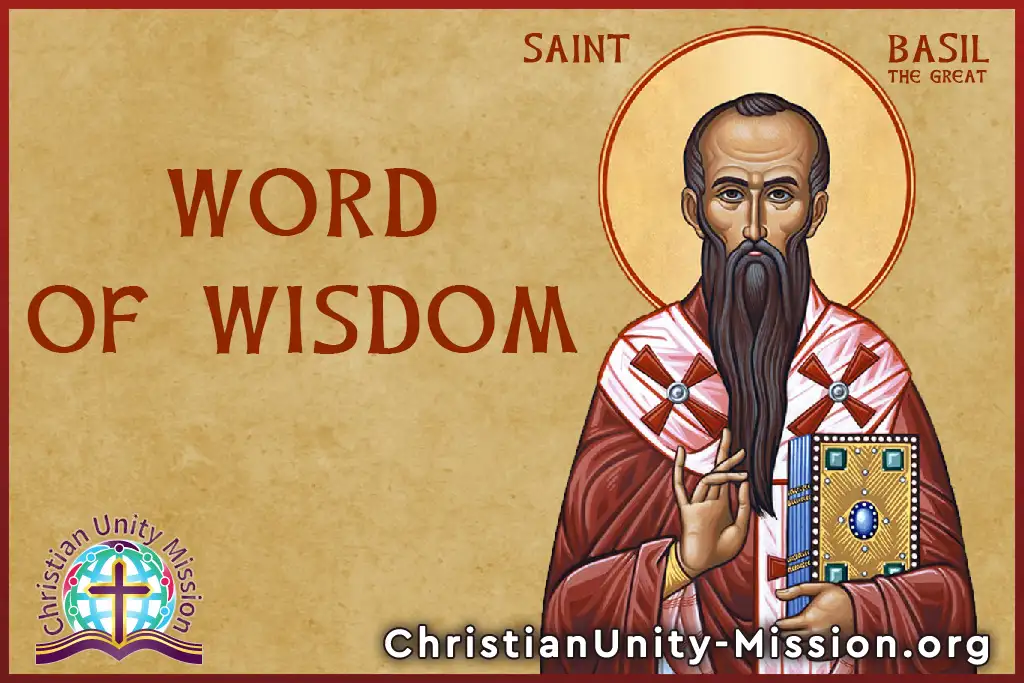
“If you see your neighbor in sin, don’t look only at this, but also think about what he has done or does that is good, and infrequently trying this in general, while not partially judging, you will find that he is better than you.”
The word translated in the English translation of the Gospel as (hell), which is mentioned in the Gospels many times by the Lord Jesus Himself is originally in Greek (Gahanna), in Hebrew (GEHENNOM), that is to say, the Valley of Gehennom.
In the days of Jesus this valley was a place to burn garbage outside the city. It was burning all day long because they threw trash in it day and night to burn it and dispose it.
Thus, it is a pictorial image taken from the environment, and not that hell or the valley of Gehennom is a place God has prepared to burn disobedient humans. As for the word HADES, which Jesus spoke of directly, and is not pictorial, which is confused with the word HELL among people, and we read about it in the Gospel of Luke, chapter sixteen, verses twenty-three and twenty-four “The rich man also died and was buried. And being in torments in Hades, he lifted up his eyes and saw Abraham afar off, and Lazarus in his bosom.” Then he cried and said, ‘Father Abraham, have mercy on me, and send Lazarus that he may dip the tip of his finger in water and cool my tongue; for I am tormented in this flame.” It is clear that Jesus’ words are about Lazarus and the rich man after their death from the flesh, they are spirits without bodies, and therefore it cannot be the sensual fire of barbecue that we know because sensual fire does not burn souls. Whatever the meaning of fire, the rich man is in a place and in a situation where he suffers excruciating torment, which Jesus Himself calls HADES (hell).
Jesus did not say that God is the one who tortures in hades, as the Jewish heritage teaches.
So, what the HADES (hell) is it?
According to the teachings of the Apostles and the Early Fathers of the church, HADES (hell) is the prison in which Satan imprisoned his captives, as he attracted them to himself by the temptation of sin. It is the place where the human spirit of Christ went during the cross to free the souls who were unjustly imprisoned and captivated by Satan. “For Christ also suffered once for sins, the just for the unjust, that He might bring us to God, being put to death in the flesh but made alive by the Spirit, by whom also He went and preached to the spirits in prison, who formerly were disobedient,” (1 Peter3:18-20.) It is clear that Jesus’ words are about Lazarus and the rich man after their death from the flesh, they are spirits without bodies, and therefore it cannot be the sensual fire of barbecue that we know because sensual fire does not burn souls.

The Incarnation of the Son of God, Jesus Christ, is the mystery, which was in God’s Plan before the ages. It was the central act in this Divine Plan for mankind to become holy and made immortal through communion with the Incarnate Word of God, Jesus Christ. He became man because it was the Divine Plan and mystery before the ages to unite man with God and His life in Christ. Through Satan, the fallen angel, Adam and Eve the first humans were deceived by his thoughts and his evil knowledge that he transmitted to them. They lost the potentiality to attain perfection and immortality because they switched from contemplating the life of God to engaging in self-desires and lust. They brought themselves into a fallen world where they would receive death and would become alienated from God. His creation was wounded by Satan’s deception and was left spiritually and physically ill.
The Word of God came in His own Person, because it was He alone, the Image of the Father, Who could recreate man made after the Image. In order to effect this re-creation, however, He had first to do away with death and corruption. Therefore He assumed a human body, in order that in it death might once and for all be destroyed, and that men might be renewed according to the Image of God. Salvation, or "being saved," therefore, refers to this process of being saved from death and corruption and the fate of eternal death. There is nothing that a person can do to earn salvation. It is rather a gift from God. However, this gift of relationship has to be accepted by the believer, since God will not force salvation on humanity. Man is free to reject the gift of salvation continually offered by God. To be saved, man must work together with God in his entire being, including his will, effort and actions, are perfectly conformed with, and united to, His eternal life.
God becomes powerless before human freedom; He cannot violate it since it flows from His own omnipotence. Certainly man was created by the will of God alone; but he cannot be made holy by Him alone. A single will to raise up the image, but two to make the image into a likeness. The love of God for man is so great that it cannot constrain, for there is no love without respect. The ultimate goal of a Christian is to be in union with God. Salvation therefore is not merely an escape from the eternal bondage of death, but an entrance to participate in Christ’s eternal life.
My Heavenly Father,
I know that you are a good God and you love me. I am unfaithful but you remain faithfulI forever and ever. I know that my sins became obstacles to receive your healing power. I come to you now and I confess all my transgressions and I repent asking your forgiveness. I know you already hold my heart and life in your hands. If I can bring you more glory through healing, then that's what I ask for. That's what I desire.
Amen.
“Repay no one evil for evil. Have regard for good things in the sight of all men. If it is possible, as much as depends on you, live peaceably with all men. Beloved, do not avenge yourselves, but rather give place to wrath; for it is written, “Vengeance is Mine, I will repay,” says the Lord. Therefore “If your enemy is hungry, feed him; If he is thirsty, give him a drink; For in so doing you will heap coals of fire on his head. ”Do not be overcome by evil, but overcome evil with good.”
The Behavior of God’s children:
1- Repay no one evil for evil.
2- Do good things in the sight of all men.
3- Live peacefully with all men.
3- Do not avenge for themselves because the Lord is the one who will repay.
4- Feed their enemies if they are hungry.
5- Give their enemies a drink if they are thirsty.
WHY the children of God must do all of this?
FOR in doing so, they will heap coals of fire on their enemies’ heads
What does that mean?
The EVIL ONE cannot do GOOD THINGS so when he sees good things he GET BURNED.
“Do not be overcome by evil,
BUT OVERCOME EVIL WITH GOOD.”
So, in order for God’s child to OVERCOME EVIL he must
NOT REPAY EVIL WITH EVIL BUT OVERCOME EVIL WITH GOOD.