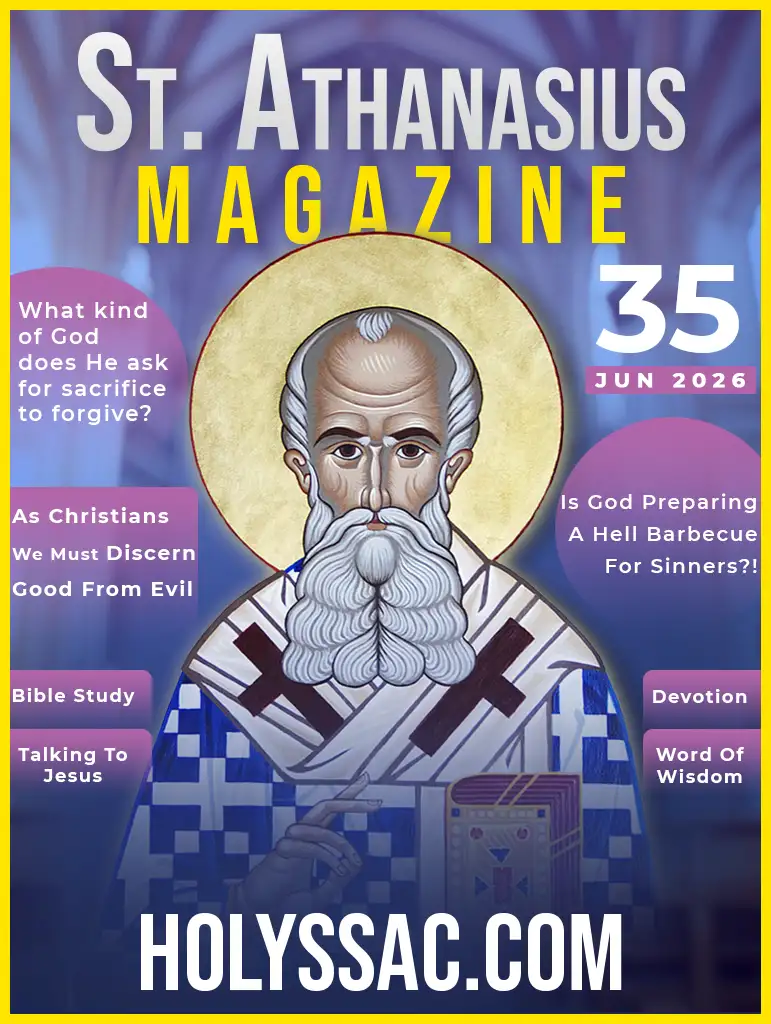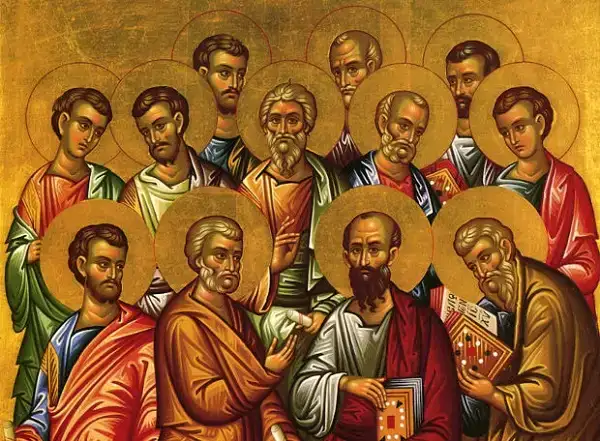
Saint Anthony the Great is known as the Father of monasticism, and the long ascetical sermon in The Life of Saint Anthony by Saint Athanasius (Sections 16-34), could be called the first monastic Rule.
He was born in Egypt in the village of Coma, near the desert of the Thebaid, in the year 251. His parents were pious Christians of illustrious lineage. Anthony was a serious child and was respectful and obedient to his parents. He loved to attend church services, and he listened to the Holy Scripture so attentively, that he remembered what he heard all his life.
When Saint Anthony was about twenty years old, he lost his parents, but he was responsible for the care of his younger sister. Going to church about six months later, the youth reflected on how the faithful, in the Acts of the Apostles (4:35), sold their possessions and gave the proceeds to the Apostles for the needy.
Then he entered the church and heard the Gospel passage where Christ speaks to the rich young man: “If you would be perfect, go, sell what you possess and give it to the poor, and you will have treasure in heaven; and come follow Me” (Mt.19:21). Anthony felt that these words applied to him. Therefore, he sold the property that he received after the death of his parents, then distributed the money to the poor, and left his sister in the care of pious virgins in a convent.
Leaving his parental home, Saint Anthony began his ascetical life in a hut not far from his village. By working with his hands, he was able to earn his livelihood and also alms for the poor. Sometimes, the holy youth also visited other ascetics living in the area, and from each he sought direction and benefit. He turned to one particular ascetic for guidance in the spiritual life.
In this period of his life Saint Anthony endured terrible temptations from the devil. The Enemy of the race of man troubled the young ascetic with thoughts of his former life, doubts about his chosen path, concern for his sister, and he tempted Anthony with lewd thoughts and carnal feelings. But the saint extinguished that fire by meditating on Christ and by thinking of eternal punishment, thereby overcoming the devil.
Realizing that the devil would undoubtedly attack him in another manner, Saint Anthony prayed and intensified his efforts. Anthony prayed that the Lord would show him the path of salvation. And he was granted a vision. The ascetic beheld a man, who by turns alternately finished a prayer, and then began to work. This was an angel, which the Lord had sent to instruct His chosen one.
Saint Anthony tried to accustom himself to a stricter way of life. He partook of food only after sunset, he spent all night praying until dawn. Soon he slept only every third day. But the devil would not cease his tricks, and trying to scare the monk, he appeared under the guise of monstrous phantoms. The saint however protected himself with the Life-Creating Cross. Finally the Enemy appeared to him in the guise of a frightful looking small dark figure, and hypocritically declaring himself beaten, he thought he could tempt the saint into vanity and pride. The saint, however, vanquished the Enemy with prayer.
For even greater solitude, Saint Anthony moved farther away from the village, into a graveyard. He asked a friend to bring him a little bread on designated days, then shut himself in a tomb. Then the devils pounced upon the saint intending to kill him, and inflicted terrible wounds upon him. By the providence of the Lord, Anthony’s friend arrived the next day to bring him his food. Seeing him lying on the ground as if dead, he took him back to the village. They thought the saint was dead and prepared for his burial. At midnight, Saint Anthony regained consciousness and told his friend to carry him back to the tombs.
Saint Anthony’s staunchness was greater than the wiles of the Enemy. Taking the form of ferocious beasts, the devils tried to force the saint to leave that place, but he defeated them by trusting in the Lord. Looking up, the saint saw the roof opening, as it were, and a ray of light coming down toward him. The demons disappeared and he cried out, “Where have You been, O Merciful Jesus? Why didn’t You appear from the very beginning to end my pain?”
The Lord replied, “I was here, Anthony, but wanted to see your struggle. Now, since you have not yielded, I shall always help you and make your name known throughout all the world.” After this vision Saint Anthony was healed of his wounds and felt stronger than before. He was then thirty-five years of age.
Having gained spiritual experience in his struggle with the devil, Saint Anthony considered going into the Thebaid desert to serve the Lord. He asked the Elder (to whom he had turned for guidance at the beginning of his monastic journey) to go into the desert with him. The Elder, while blessing him in the then as yet unheard of exploit of being a hermit, decided not to accompany him because of his age.
Saint Anthony went into the desert alone. The devil tried to hinder him, by placing a large silver disc in his path, then gold, but the saint ignored it and passed by. He found an abandoned fort on the other side of the river and settled there, barricading the entrance with stones. His faithful friend brought him bread twice a year, and there was water inside the fort.
Saint Anthony spent twenty years in complete isolation and constant struggle with the demons, and he finally achieved perfect calm. The saint’s friends removed the stones from the entrance , and they went to Saint Anthony and besought him to take them under his guidance. Soon Saint Anthony’s cell was surrounded by several monasteries, and the saint acted as a father and guide to their inhabitants, giving spiritual instruction to all who came into the desert seeking salvation. He increased the zeal of those who were already monks, and inspired others with a love for the ascetical life. He told them to strive to please the Lord, and not to become faint-hearted in their labors. He also urged them not to fear demonic assaults, but to repel the Enemy by the power of the Life-Creating Cross of the Lord.
In the year 311 there was a fierce persecution against Christians, in the reign of the emperor Maximian. Wishing to suffer with the holy martyrs, Saint Anthony left the desert and went to Alexandria. He openly ministered to those in prison, he was present at the trial and interrogations of the confessors, and accompanying the martyrs to the place of execution. It pleased the Lord to preserve him, however, for the benefit of Christians.
At the close of the persecution, the saint returned to the desert and continued his exploits. The Lord granted the saint the gift of wonderworking, casting out demons and healing the sick by the power of his prayer. The great crowds of people coming to him disrupted his solitude, and he went off still farther, into the inner desert where he settled atop a high elevation. But the brethren of the monasteries sought him out and asked him to visit their communities.
Another time Saint Anthony left the desert and arrived in Alexandria to defend the Orthodox Faith against the Manichaean and Arian heresies. Knowing that the name of Saint Anthony was venerated by all the Church, the Arians said that he adhered to their heretical teaching. But Saint Anthony publicly denounced Arianism in front of everyone and in the presence of the bishop. During his brief stay at Alexandria, he converted a great multitude of pagans to Christ.
People from all walks of life loved the saint and sought his advice. Pagan philosophers once came to Abba Anthony intending to mock him for his lack of education, but by his words he reduced them to silence. Emperor Constantine the Great (May 21) and his sons wrote to Saint Anthony and asked him for a reply. He praised the emperor for his belief in Christ, and advised him to remember the future judgment, and to know that Christ is the true King.
Saint Anthony spent eighty-five years in the solitary desert. Shortly before his death, he told the brethren that soon he would be taken from them. He instructed them to preserve the Orthodox Faith in its purity, to avoid any association with heretics, and not to be negligent in their monastic struggles. “Strive to be united first with the Lord, and then with the saints, so that after death they may receive you as familiar friends into the everlasting dwellings.”
The saint instructed two of his disciples, who had attended him in the final fifteen years of his life, to bury him in the desert and not in Alexandria. He left one of his monastic mantles to Saint Athanasius of Alexandria (January 18), and the other to Saint Serapion of Thmuis (March 21). Saint Anthony died peacefully in the year 356, at age 105, and he was buried in the desert by his disciples.
The Life of the famed ascetic Saint Anthony the Great was written by Saint Athanasius of Alexandria. This is the first biography of a saint who was not a martyr, and is considered to be one of the finest of Saint Athanasius’ writings. Saint John Chrysostom recommends that this Life be read by every Christian.
“These things are insignificant compared with Anthony’s virtues,” writes Saint Athanasius, “but judge from them what the man of God Anthony was like. From his youth until his old age, he kept his zeal for asceticism, he did not give in to the desire for costly foods because of his age, nor did he alter his clothing because of the infirmity of his body. He did not even wash his feet with water. He remained very healthy, and he could see well because his eyes were sound and undimmed. Not one of his teeth fell out, but near the gums they had become worn due to his advanced age. He remained strong in his hands and feet.... He was spoken of everywhere, and was admired by everyone, and was sought even by those who had not seen him, which is evidence of his virtue and of a soul dear to God.”
AS CHRISTIANS WE MUST DISCERN GOOD FROM EVIL
“For there are many insubordinate, both idle talkers and deceivers, especially those of the circumcision, whose mouths must be stopped, who subvert whole households, teaching things which they ought not, for the sake of dishonest gain.” (Titus1:10-11).
As Christians we often have a hard time discerning between an evil heart and an ordinary sinner, who isn’t perfect, and full of weakness and sin. We as believers do not see evil people because we find it so difficult to believe that evil people actually exist even inside the church. We can’t imagine someone deceiving us intentionally, hurting others with no regret, spreading out outrageous fabrications to ruin someone’s reputation, or pretending he or she is spiritually committed yet has no fear of God before his or her eyes. The Gospel clearly tells us that among God’s people there are wolves that wear sheep’s clothing. Part of our maturity as spiritual Christians is that we have been trained to discern between good and evil. Why is that so important? It’s important because evil usually pretends to be good, and without discernment we can be easily fooled .Most sinners do not happily indulge evil urges, nor do they feel good about having them. Sinners feel ashamed and guilty while evil people do not. The problem is that we all miss God's mark of moral perfection, and we forget that the Holy Sprit in us should be having fruits in our lives and our behaviors inside the church and outside. Remember, Satan masquerades as an angel of light. He knows more true doctrine than you or I will ever know, but his heart is wicked. Why? Because although he knows the truth, he does not believe it or live it. Many are the attributes of evil people. Evil hearts are experts at creating confusion and contention. They twist the facts, mislead, lie, avoid taking responsibility, deny reality, make up stories, and withhold information. Evil hearts are experts at fooling others with their smooth speech and flattering words. But if you look at the fruit of their lives or the follow through of their words, you will find no real evidence of godly growth or change. It’s all smoke. Evil hearts crave demand and control, and their highest authority is their own self-reverence. They reject feedback, real accountability, and make up their own rules to live by. They use Scripture to their own advantage but ignore and reject passages that might require self-correction and repentance. Evil hearts play on the sympathies of good-willed people, often trumping the grace card. They demand mercy but give none themselves. They demand warmth, forgiveness, and intimacy from those they have harmed with no empathy for the pain they have caused and no real intention of making amends or working hard to rebuild broken trust. If you are working with someone who exhibits these characteristics, it’s important that you confront them head on. You must name evil for what it is. The longer you try to reason with them or show mercy towards them, the more you, as a Christian believer, will become a pawn in his or her game. “But when grace is shown to the wicked, they do not learn righteousness; even in a land of uprightness they go on doing evil and do not regard the majesty of the Lord" (Isaiah 26:10).
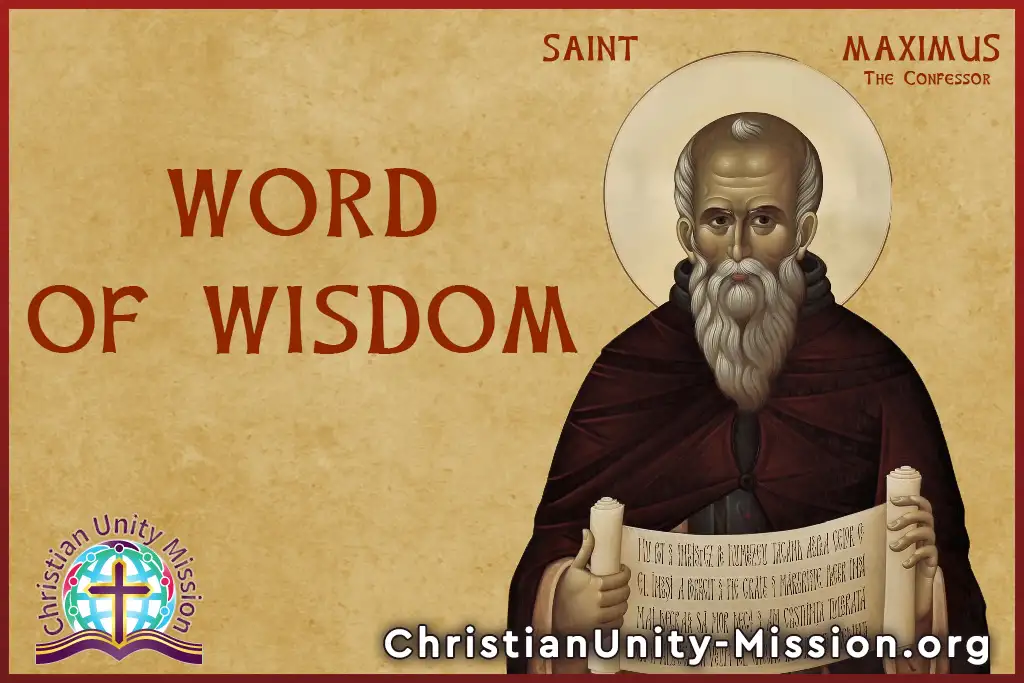
“From death as a condemnation of sin and, like Christ, the captain of our salvation (Heb 2:10), turned death from a weapon to destroy human nature into a weapon to destroy sin. For if sin maintains death as a weapon to destroy human nature in those who, with Adam, keep sin active, how much more will human nature boast death as a weapon to destroy sin in those who realize righteousness through faith in Christ!13”
- St. Maximus the Confessor, On the Cosmic Mystery of Jesus Christ
This teaching is not found in the Gospel. It was spread in the twelfth century by Ansalem, the Archbishop of Canterbury. He is the one who taught the ‘Satisfaction Theory’ that says that God cannot forgive unless a sacrifice is offered to Him and that this sacrifice was the Son of God, Jesus Christ. No verse in the New Testament supports this incorrect theological theory. We read in the Epistle to the Hebrews, chapter two, verses fourteen and fifteen, “Inasmuch then as the children have partaken of flesh and blood, He Himself likewise shared in the same, that through death He might destroy him who had the power of death, that is, the devil, and release those who through fear of death were all their lifetime subject to bondage.” And also, chapter nine, verse twenty-six, ”but now, once at the end of the ages, He has appeared to put away sin by the sacrifice of Himself.” Christ confronted the devil’s power of sin and death on the cross, and He overcame him and abolished sin and death. The forgiveness of Christ that He has given us is cleansing and purification from sin. He gave us the power to reject the temptation of sin and set us free from its bondage.
In the Gospel, Christ used the language, expressions, and sayings that people circulated in His time and His Jewish community, such as the phrase “hell of fire.” But when we read the Gospel, we do not find that the fire He’s talking about means the incandescent fire used in the barbecue, as the ancient people told us and inherited this idea. Jesus took this rolling expression to describe the state of human misery of those outside the glory of His eternal life, as fire. He never said that God, the Heavenly Father, would throw people into this fire, as human barbecue, because they are sinners and must be punished. On the contrary, in the Gospel of Mathew, chapter nine, verses ten till thirteen, we read that many tax collectors and sinners came and sat down with Jesus and His disciples. And when the Pharisees saw that, they asked why does He eat with tax collectors and sinners? When Jesus heard that, He said to them, He desires mercy not sacrifice and that He did not come to call the righteous, but sinners, to repentance. “Those who are well have no need of a physician, but those who are sick. But go and learn what this means: ‘I desire mercy and not sacrifice.’ For I did not come to call the righteous, but sinners, to repentance.”
Unfortunately, Christian preachers have also been influenced by this inherited idea. In the New Testament, we read in the Gospels that God loved the world and gave us His only begotten Son so that everyone who believes in Him would not perish, but that he would have eternal life, i.e., His life. “For God so loved the world that He gave His only begotten Son, that whoever believes in Him should not perish but have everlasting life.” ( John 3:16).
Christians must read the Gospel well and learn from it, not from the legacies we inherited. We read In the Gospel of Mathew, chapter five, Christ Himself says, “You have heard that it was said to those of old , ‘You shall love your neighbor and hate your enemy.’ But I say to you, love your enemies, bless those who curse you, do good to those who hate you, and pray for those who spitefully use you and persecute you,”(Mathew 5:43-45). We see this model of change He has brought to all the old commandments and ancient legacies with all its violence and hostility, which was appropriate for the times of darkness, but does not correspond to the new covenant of grace and the light of the Gospel of love proclaimed to us by God through His only begotten Son, Jesus Christ.
In the old, people considered natural disasters were acts of revenge and punishment from God to human beings. One of the legacies we inherited to tarnish God’s image is the flood incident in Noah’s days. They told us that God had decided to destroy all creatures on earth as He considered them sinners. While the truth is that God, because of His love, told Noah about the coming of a natural disaster, the flood, and advised him to make an arch and call on all people to enter to be saved. But they did not hear Noah’s warning and considered him an idiot. God is a God of salvation and protection, not destructive to humanity and avenged from it as the ancient people portrayed Him. We must understand the natural disasters in their natural contexts, such as river floods and severe sea storms that have occurred in history and continue to occur! Thus, we understand that what happened to Noah, his family, and his animals was the inspiration of God's love for him for salvation, without attributing to God the violent and vengeful images depicted by the ancients. We, the Christians, must read the Old Testament with the eyes of enlightenment of the New Testament and not vice versa.
The Gospel declares that God loves man and seeks to save him from death, destruction, and desolation caused by the devil. He revealed Himself and His true light in Christ Jesus, Who was and still proclaims and endues the love of the Heavenly Father to those who respond to Him, and grants healing from diseases, internal peace, and liberty from the misery of this life to happiness and joy that extends forever.
As the New Testament tells us in St. John's First Epistle, chapter five, verse eleven, “And this is the testimony: that God has given us eternal life, and this life is in His Son.”
In this series of lectures, we will address the distortions of the historical knowledge of the ancients, which painted a bloody picture of human history and a terrible relationship with an absent God! Until love was proclaimed when Christ faced death on the cross and annihilated him with His resurrection. And I will try to give you a practical and living experience, to discover the truth of the Gospel without the distortions of the ancient people, and to experience God's practical and realistic love in our lives, which He continues to offer and grant us through Christ Jesus in the Holy Spirit. He still calls on everyone, saying, “Come to Me, all you who labor and are heavy laden, and I will give you rest.” (Mathew 11:28).
You are welcome to join us on this journey to discover the mystery of eternal life and the Heavenly Father’s love for all the world.
As I rise from sleep I thank You, O Holy Trinity, for through Your great goodness and patience You were not angered with me, an idler and sinner, nor have You destroyed me in my sins, but have shown Your usual love for men, and when I was prostrate in despair, You raised me to keep the morning watch and to glorify Your power. And now enlighten my mind’s eye and open my mouth to study Your words and understand Your commandments and do Your will and sing to You in heartfelt adoration and praise Your Most Holy Name of Father, Son, and Holy Spirit, now and ever, and to the ages of ages.
Amen.
“There are diversities of gifts, but the same Spirit. There are differences of ministries, but the same Lord. And there are diversities of activities, but it is the same God who works all in all. But the manifestation of the Spirit is given to each one for the profit of all: for to one is given the word of wisdom through the Spirit, to another the word of knowledge through the same Spirit, to another faith by the same Spirit, to another gifts of healings by the same Spirit, to another the working of miracles, to another prophecy, to another discerning of spirits, to another different kinds of tongues, to another the interpretation of tongues. But one and the same Spirit works all these things, distributing to each one individually as He wills.”
We have to know that
• There are DIVERSITIES of GIFTS given to us BY THE HOLY SPIRIT.
• There are DIFFERENCES of MINISTRIES, BUT THE SAME LORD.
• And there are DIVERSITIES of ACTIVITIES DONE BY ONE SPIRIT.
BUT
• It is the SAME GOD who works ALL IN ALL.
• Gifts of the Holy Spirit are:
1- Word of Wisdom.
2- Prophecy.
3- Word of knowledge.
4- Faith.
5- Gifts of Healings.
6- Working of Miracles.
7- Discerning of Spirits.
8- Speaking with Tongues.
9- Interpretation of Tongues.
• BUT ONE & THE SAME SPIRIT WORKS ALL
• DISTRIBUTING TO EACH ONE INDIVIDUALLY AS HE WILLS.