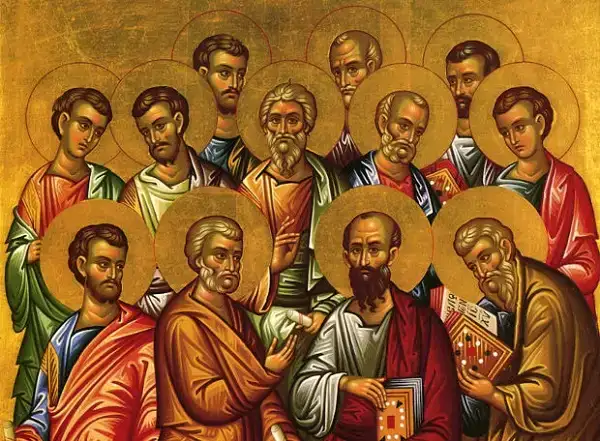
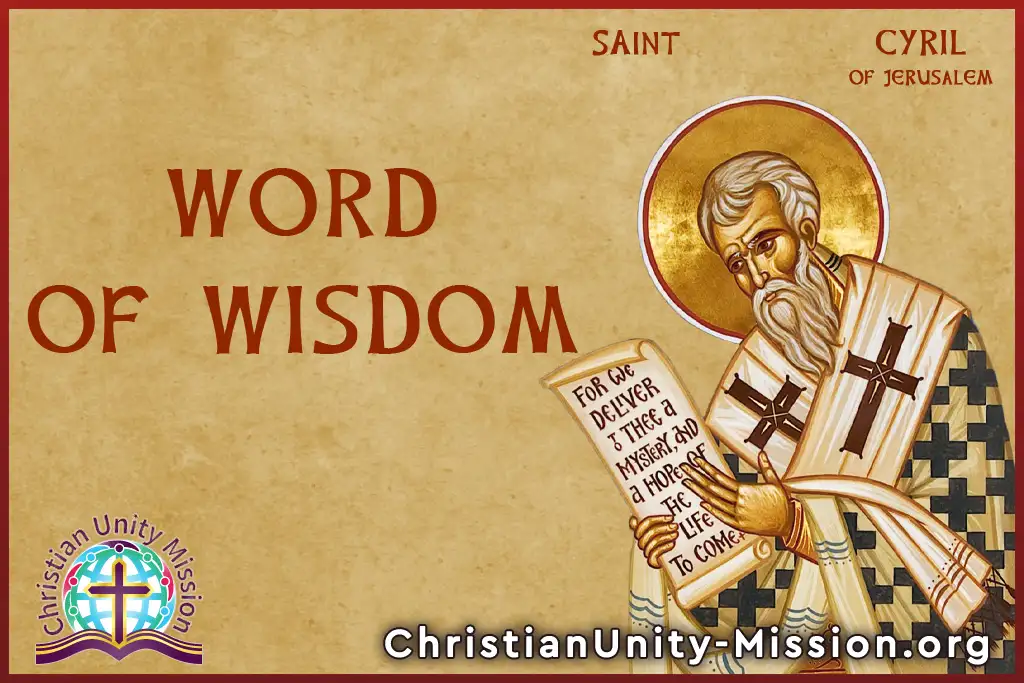
Saint Cyril, Archbishop of Jerusalem, was born in Jerusalem in the year 315 and was raised in strict Christian piety. Upon reaching the age of maturity, he became a monk, and in the year 346 he became a presbyter. In the year 350, upon the death of Archbishop Maximus, he succeeded him on the episcopal throne of Jerusalem.
As Patriarch of Jerusalem, Saint Cyril zealously fought against the heresies of Arius and Macedonius. In so doing, he aroused the animosity of the Arian bishops, who sought to have him deposed and banished from Jerusalem.
There was a miraculous portent in 351 at Jerusalem: at the third hour of the day on the Feast of Pentecost, the Holy Cross appeared in the heavens, shining with a radiant light. It stretched from Golgotha above the Mount of Olives. Saint Cyril reported this portent to the Arian emperor Constantius (351-363), hoping to convert him to Orthodoxy.
The heretic Acacius, deposed by the Council of Sardica, was formerly the Metropolitan of Caesarea, and he collaborated with the emperor to have Saint Cyril removed. An intense famine struck Jerusalem, and Saint Cyril expended all his wealth in charity. But since the famine did not abate, the saint pawned church utensils, and used the money to buy wheat for the starving. The saint’s enemies spread a scandalous rumor that they had seen a woman in the city dancing around in clerical garb. Taking advantage of this rumor, the heretics forcibly expelled the saint.
The saint found shelter with Bishop Silvanus in Tarsus. After this, a local Council was held at Seleucia, at which there were about 150 bishops, and among them Saint Cyril. The heretical Metropolitan Acacius did not want to allow him to take a seat, but the Council would not consent to this. Acacius stormed out of the Council, and before the emperor and the Arian patriarch Eudoxius, he denounced both the Council and Saint Cyril. The emperor had the saint imprisoned.
When the emperor Julian the Apostate (361-363) ascended the throne he repealed all the anti-Orthodox decrees of Constantius, seemingly out of piety. Saint Cyril returned to his own flock. But after a certain while, when Julian had become secure upon the throne, he openly apostasized and renounced Christ. He permitted the Jews to start rebuilding the Temple of Jerusalem that had been destroyed by the Romans, and he even provided them part of the funds for the building from the state treasury.
Saint Cyril predicted that the words of the Savior about the destruction of the Temple down to its very stones (Luke. 21:6) would undoubtedly transpire, and the blasphemous intent of Julian would come to naught. Soon there was such a powerful earthquake, that even the solidly set foundation of the ancient Temple of Solomon shifted in its place, and what had been rebuilt fell down and shattered into dust. When the Jews resumed construction, a fire came down from the heavens and destroyed the tools of the workmen. Great terror seized everyone. On the following night, the Sign of the Cross appeared on the clothing of the Jews, which they could not remove by any means.
After this heavenly confirmation of Saint Cyril’s prediction, they banished him again, and the bishop’s throne was occupied by Saint Cyriacus. But Saint Cyriacus soon suffered a martyr’s death (October 28).
After the emperor Julian perished in 363, Saint Cyril returned to his See, but during the reign of the emperor Valens (364-378) he was exiled for a third time. It was only under the holy emperor Saint Theodosius the Great (379-395) that he finally returned to his archpastoral activity. In 381 Saint Cyril participated in the Second Ecumenical Council, which condemned the heresy of Macedonius and affirmed the Nicea-Constantinople Symbol of Faith (Creed).
Saint Cyril’s works include twenty-three Instructions (Eighteen are Catechetical, intended for those preparing for Baptism, and five are for the newly-baptized) and two discourses on Gospel themes: “On the Paralytic,” and “Concerning the Transformation of Water into Wine at Cana.”
At the heart of the Catechetical Instructions is a detailed explanation of the Symbol of Faith. The saint suggests that a Christian should inscribe the Symbol of Faith upon “the tablets of the heart.”
“The articles of the Faith,” Saint Cyril teaches, “were not written through human cleverness, but they contain everything that is most important in all the Scriptures, in a single teaching of faith. Just as the mustard seed contains all its plethora of branches within its small kernel, so also does the Faith in its several declarations combine all the pious teachings of the Old and the New Testaments.”
Saint Cyril, a great ascetic and a champion of Orthodoxy, died in the year 386.
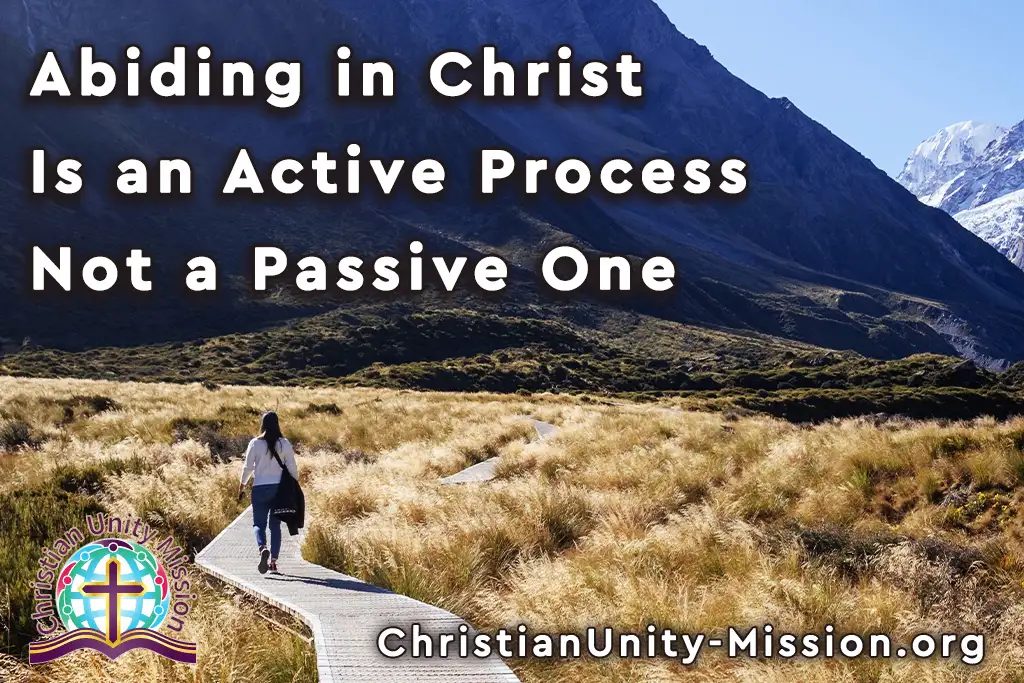
“Remain in me, as I also remain in you. No branch can bear fruit by itself; it must remain in the vine. Neither can you bear fruit unless you remain in me.” (John 15:4).
One of Jesus’ last teachings to the disciples is about abiding in the Vine. Jesus is the Vine, and he tells us that apart from him we can do nothing. But often, when life gets busy and takes over, we forget about abiding. We forget that just like any other relationship, our relationship with God must be nourished in order to grow and flourish. When we see others who seem to be hearing from God like clockwork, it could be that they are simply spending more time with him. They may be getting into his Word regularly or praying on a more consistent basis. No matter where we are or how long it’s been since we’ve made time with God a priority, he is always waiting for us to come to him. He delights in our prayers, and he answers them. If you are spending time with him consistently and are still having difficulty sensing his guidance, don’t give up.
“Just as by melting two candles together you get one piece of wax, so, I think, one who receives the flesh and blood of Jesus is fused together with Him. And the soul finds that he is in Christ and Christ is in him.”

From the beginning, God had created man in the image of His Son Jesus, in His perfection and holiness. He created man and placed in him the possibility of growth and reproduction. But the entry of evil and sin into man's nature, body, and soul is the cause of the distortion of this divine image and is no longer what it was when God created man. Pregnancy, childbirth, and reproduction naturally occur according to the parents' state, will, and nature, not as people imagine God creates every time pregnancy and birth occurs.
Creation and the possibility of reproduction occurred and were granted to man once, meaning that any deformation that has become into the nature of a person necessarily becomes in his genetic and reproductive capabilities, and this is the reason for the occurrence of deformities of the fetus and children in their mothers' womb. We cannot separate heredity from reproduction because heredity is inherited life. Suppose the grandparents or parents were injured, destroyed, or damaged their bodies or even their psyche; in that case, it is recorded in the genetic code and inherited by the children, which is nature.
But there is a positive divine intervention of God in favor of the human being to heal and restore his nature from corruption, and that is through obtaining the grace of salvation and the work of the Holy Spirit that paves the way for healing and the talents of healing, or who grants compensation and the ability to replace what is lacking in weakness in the body. The solution does not need to be a miracle cure for this deformity, but there will also be compensation and support for this deficiency from the Holy Spirit.
When Jesus Christ says in the Gospel of John, chapter fourteen, verse six, "I am the way, the truth, and the life. No one comes to the Father except through Me”, does He talk about our faith and belief in God the Father, or He is talking about us coming to the Heavenly Father which is more than just believing in God? Does Christ mean by coming to the Father, to believe in God and His prophet Moses and the rest of the prophets who prophesied about Him by the inspiration of the Holy Spirit? The Gospel answers frankly and clearly all these questions and tells us in the Gospel of John, chapter six, verses forty-six till fifty-one, that faith in God and his servant Moses does not lead to the purpose and the way to the Father God, and that the only way to the Father is Jesus Christ, “Not that anyone has seen the Father, except He who is from God; He has seen the Father. Most assuredly, I say to you, he who believes in Me has everlasting life. I am the bread of life. …. This is the bread which comes down from heaven, that one may eat of it and not die. I am the living bread which came down from heaven. If anyone eats of this bread, he will live forever; and the bread that I shall give is My flesh, which I shall give for the life of the world.” (John:6: 46,47,50,51)
What distinguishes Christianity as its purpose and the incarnation of Christ is man’s participation in the divine nature, which neither of the prophets could give or transfer to man. The question is, why is christ the only way to the Heavenly Father? Because none of the prophets has received the grace of participation in the divine nature. That is why the Heavenly Father sent His only begotten Son, Jesus Christ, embodied among us in the world, to abolish death with His life on the cross and to give us His resurrection to be partners of the divine nature with His grace and the gift of His Holy Spirit. “For we have become partakers of Christ if we hold the beginning of our confidence steadfast to the end.” (Hebrews:3-14.) Jesus became the path and the only way between earth and heaven so that we may come to the Father and unite with Him through Jesus Christ. “No one has ascended to heaven but He who came down from heaven, that is, the Son of Man who is in heaven.” (John 3:13.)
Many believe in Christ and continue to attend the Church every Sunday without realizing up till this hour that the purpose of the Christian life is to unite with God the Father through Jesus Christ, His Son, in the Holy Spirit. “through the knowledge of Him who called us by glory and virtue, by which have been given to us exceedingly great and precious promises, that through these you may be partakers of the divine nature, having escaped the corruption that is in the world through lust.” (2Peter 1:3-4). That is why their lives lack the power and glory of Christ and His predominance over evil spirits. Because they have not experienced it and may not have known it yet, they have not changed to the image of Christ, nor are they able to bear the fruitful testimony of Christ. “Let your light so shine before men, that they may see your good works and glorify your Father in heaven.” (Mathew:5-16).
Sisters and brothers, now is the time for everyone of us to discover the truth of the Gospel, which has long been absent from our eyes. We have to accept and receive the eternal life, God’s life, in us in the Holy Spirit. Christianity is not just a religion, with a list of commands that we must do in order to please God who is far away in heaven. Christianity is a life with God the Father and His Son, Jesus Christ, in the Holy Spirit. Our goal as Christians is to participate in His divine nature and be in His image and likeness.
“And we know that the Son of God has come and has given us an understanding, that we may know Him who is true; and we are in Him who is true, in His Son Jesus Christ. This is the true God and eternal life.”
(1John : 5-20).
Let us pray that Jesus may reign over us and that our land may be at peace -i.e., that our bodies may be free from the assaults of fleshly desires.
When these have ceased, we shall be able to rest in God’s peace and love.
Father, Son, and Holy Spirit will shelter us as we rest, our peace of mind and body once recovered.
Glory to God the eternal, age after age.
Amen.
We can perceive the word of God
only with the enlightenment of the Holy Spirit working in us
Glory to the Father, Son & the Holy Spirit
“Behold what manner of love the Father has bestowed on us, that we should be called children of God! Therefore the world does not know us, because it did not know Him. Beloved, now we are children of God; and it has not yet been revealed what we shall be, but we know that when He is revealed, we shall be like Him, for we shall see Him as He is. And everyone who has this hope in Him purifies himself, just as He is pure.”
HOW?
BY
THAT IS WHY
WHY the world does not know us?
The GREAT PROMISE is that when HE IS REVEALED
HOW?
For WE SHALL SEE HIM AS HE IS.
SO
MUST BE ALWAYS READY TO RECEIVE THIS PROMISE
AND DO WHAT?
PURIFIES HIMSELF AS HE WHO HAS CALLED US AS HIS CHILDRN
IS PURE.