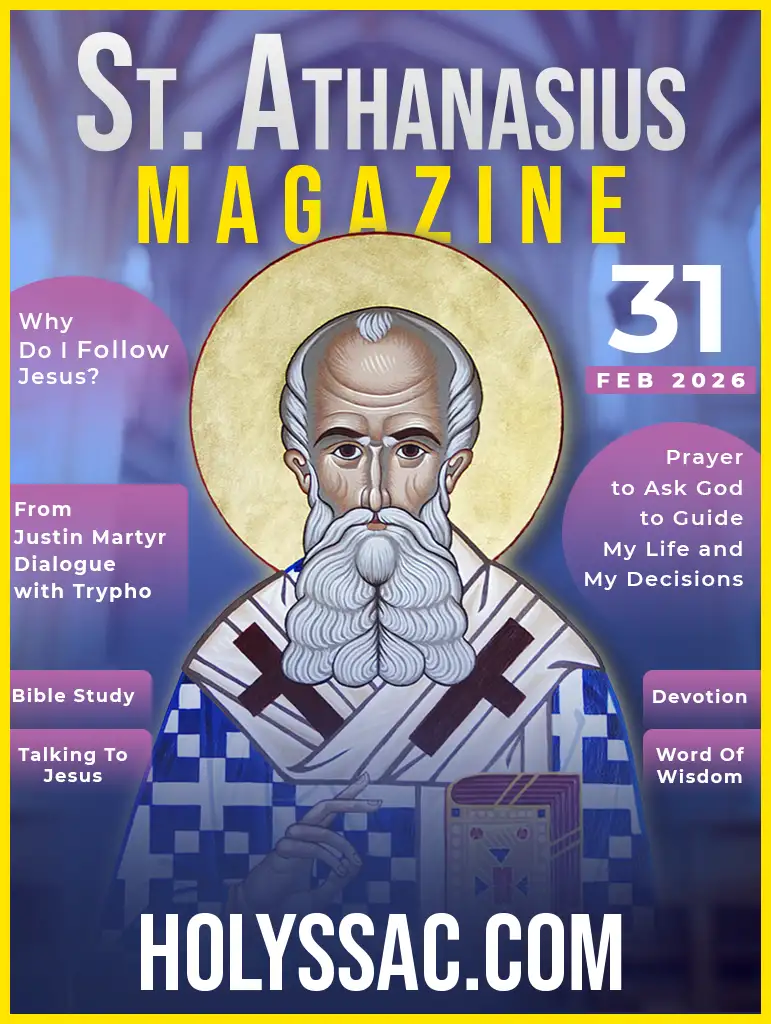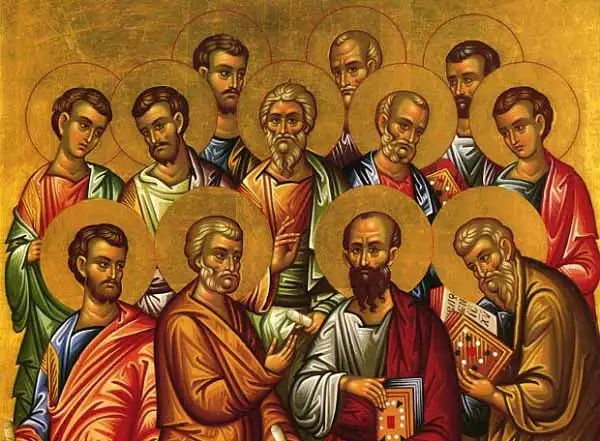
Saint Gregory the Theologian, Archbishop of Constantinople, a great Father, and teacher of the Church, was born into a Christian family of eminent lineage in the year 329, at Arianzos. His father, also named Gregory, was Bishop of Nazianzus. His pious mother, Saint Nonna, prayed to God for a son, vowing to dedicate him to the Lord. Her prayer was answered, and she named her child Gregory.
When the child learned to read, his mother presented him with the Holy Scripture. Saint Gregory received a complete and extensive education: after working at home with his uncle Saint Amphilochius, an experienced teacher of rhetoric, he then studied in the schools of Nazianzos, Caesarea in Cappadocia, and Alexandria. Then the saint decided to go to Athens to complete his education.
Saint Gregory spent six years in Athens studying rhetoric, poetry, geometry, and astronomy. Saint Basil, the future Archbishop of Caesarea also studied in Athens with Saint Gregory. They were such close friends that they seemed to be one soul in two bodies. Julian, the future emperor (361-363) and apostate from the Christian Faith, was studying philosophy in Athens at the same time.
Upon completing his education, Saint Gregory remained for a certain while at Athens as a teacher of rhetoric. He was also familiar with pagan philosophy and literature.
In 358 Saint Gregory quietly left Athens and returned to his parents at Nazianzus. At thirty-three years of age, he received Baptism from his father, who had been appointed Bishop of Nazianzus. Against his will, Saint Gregory was ordained to the holy priesthood by his father. However, when the elder Gregory wished to make him a bishop, he fled to join his friend Basil in Pontus. Saint Basil had organized a monastery in Pontus and had written to Gregory inviting him to come.
Saint Gregory remained with Saint Basil for several years. When his brother Saint Caesarius died, he returned home to help his father administer his diocese. The local church was also in turmoil because of the Arian heresy. Saint Gregory had the difficult task of reconciling the bishop with his flock, who condemned their pastor for signing an ambiguous interpretation of the dogmas of the faith.
Saint Gregory convinced his father of the pernicious nature of Arianism, and strengthened him in Orthodoxy. At this time, Bishop Anthimus, who pretended to be Orthodox but was really a heretic, became Metropolitan of Tyana. Saint Basil had been consecrated as the Archbishop of Caesarea, Cappadocia. Anthimus wished to separate from Saint Basil and to divide the province of Cappadocia.
Saint Basil the Great made Saint Gregory bishop of the city of Sasima, a small town between Caesarea and Tyana. However, Saint Gregory remained at Nazianzos in order to assist his dying father, and he guided the flock of this city for a while after the death of his father in 374.
Upon the death of Patriarch Valentus of Constantinople in the year 378, a council of bishops invited Saint Gregory to help the Church of Constantinople, which at this time was ravaged by heretics. Obtaining the consent of Saint Basil the Great, Saint Gregory came to Constantinople to combat heresy. In the year 379 he began to serve and preach in a small church called “Anastasis” (“Resurrection”). Like David fighting the Philistines with a sling, Saint Gregory battled against impossible odds to defeat false doctrine.
Heretics were in the majority in the capital: Arians, Macedonians, and Appolinarians. The more he preached, the more did the number of heretics decrease, and the number of the Orthodox increased. On the night of Pascha (April 21, 379) when Saint Gregory was baptizing catechumens, a mob of armed heretics burst into the church and cast stones at the Orthodox, killing one bishop and wounding Saint Gregory. But the fortitude and mildness of the saint were his armor, and his words converted many to the Orthodox Church. Saint Gregory’s literary works (orations, letters, poems) show him as a worthy preacher of the truth of Christ. He had a literary gift, and the saint sought to offer his talent to God the Word: “I offer this gift to my God, I dedicate this gift to Him. Only this remains to me as my treasure. I gave up everything else at the command of the Spirit. I gave all that I had to obtain the pearl of great price. Only in words do I master it, as a servant of the Word. I would never intentionally wish to disdain this wealth. I esteem it, I set value by it, I am comforted by it more than others are comforted by all the treasures of the world. It is the companion of all my life, a good counselor and converser; a guide on the way to Heaven and a fervent co-ascetic.” In order to preach the Word of God properly, the saint carefully prepared and revised his works.
In five sermons, or “Theological Orations,” Saint Gregory first of all defines the characteristics of a theologian, and who may theologize. Only those who are experienced can properly reason about God, those who are successful at contemplation and, most importantly, who are pure in soul and body, and utterly selfless. To reason about God properly is possible only for one who enters into it with fervor and reverence.
The first of Saint Gregory’s Five Theological Orations is devoted to arguments against the Eunomians for their blasphemy of the Holy Spirit. Closely examining everything that is said in the Gospel about the Third Person of the Most Holy Trinity, the saint refutes the heresy of Eunomios, which rejected the divinity of the Holy Spirit. He comes to two fundamental conclusions. First, in reading Holy Scripture, it is necessary to reject blind literalism and to try and understand its spiritual sense. Second, in the Old Testament the Holy Spirit operated in a hidden way. “Now the Spirit Himself dwells among us and makes the manifestation of Himself more certain. It was not safe, as long as they did not acknowledge the divinity of the Father, to proclaim openly that of the Son; and as long as the divinity of the Son was not accepted, they could not, to express it somewhat boldly, impose on us the burden of the Holy Spirit” (Or. 31:26).
The divinity of the Holy Spirit is a sublime subject. “Look at these facts: Christ is born, the Holy Spirit is His Forerunner. Christ is baptized, the Spirit bears witness to this... Christ works miracles, the Spirit accompanies them. Christ ascends, the Spirit takes His place. What great things are there in the idea of God which are not in His power? What titles appertaining to God do not apply also to Him, except for Unbegotten and Begotten? I tremble when I think of such an abundance of titles, and how many Names they blaspheme, those who revolt against the Spirit!” (Or. 31:29).
At the Second Ecumenical Council in 381, Saint Gregory was chosen as Patriarch of Constantinople. After the death of Patriarch Meletius of Antioch, Saint Gregory presided at the Council. Hoping to reconcile the West with the East, he offered to recognize Paulinus as Patriarch of Antioch.
Upon his return to his native region, Saint Gregory turned his attention to the incursion of Appolinarian heretics into the flock of Nazianzus, and he established the pious Eulalius there as bishop, while he himself withdrew into the solitude of Arianzos so dear to his heart. The saint, zealous for the truth of Christ, continued to affirm Orthodoxy through his letters and poems, while remaining in the wilderness. He died on January 25, 389, and is honored with the title “Theologian,” also given to the holy Apostle and Evangelist John.
In his works Saint Gregory, like that other Theologian Saint John, directs everything toward the Pre-eternal Word. Saint John of Damascus (December 4), in the first part of his book An Exact Exposition of the Orthodox Faith, followed the lead of Saint Gregory the Theologian.
Saint Gregory was buried at Nazianzos. In the year 950, his holy relics were transferred to Constantinople into the church of the Holy Apostles. Later on, a portion of his relics was transferred to Rome.
In appearance, the saint was of medium height and somewhat pale. He had thick eyebrows, and a short beard. His contemporaries already called the archpastor a saint. The Orthodox Church, honors Saint Gregory as a second Theologian and insightful writer on the Holy Trinity.
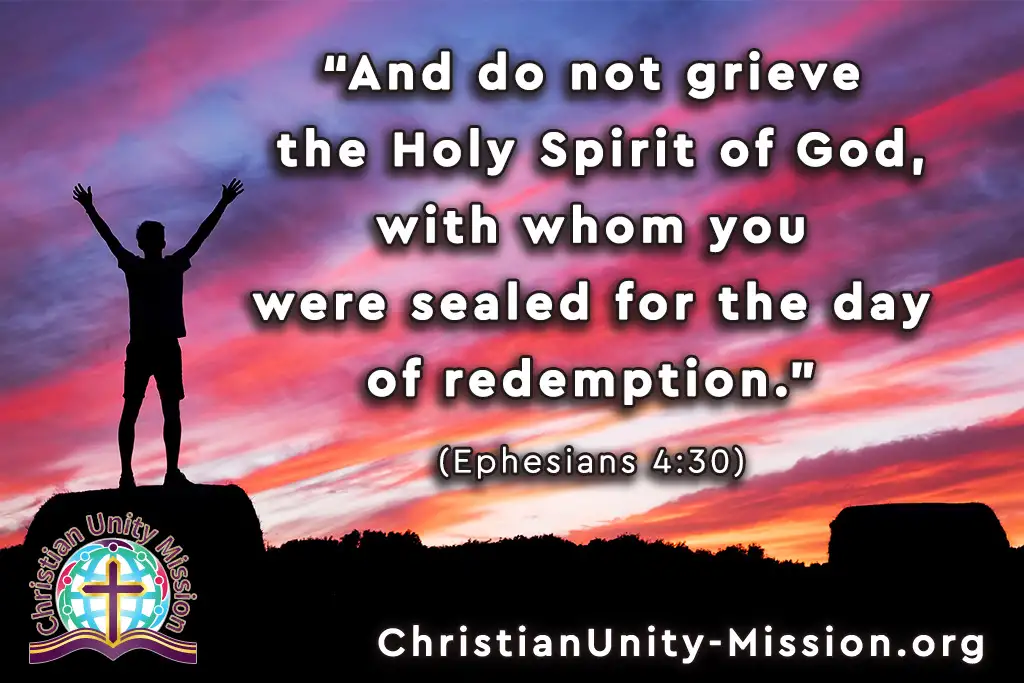
“And do not grieve the Holy Spirit of God, with whom you were sealed for the day of redemption.” (Ephesians 4:30).
We often think of the Holy Spirit as some mystical being, but the Holy Spirit is a person. He is the One who speaks to our hearts, guides us, and counsels us. But when we do not respond or our hearts become hardened, we can grieve the Spirit. We can become insensitive to his leading when we repeatedly ignore it or go against God’s Word. This is why it’s important for us to stop making excuses when we sense God leading us to do something. Instead of letting fear dictate our decisions, we step out in faith, even when it doesn’t make sense. And when we take these steps of faith, we grow, we quickly change, and we can discern the voice of the Spirit more easily, and we can also learn to recognize it. Not only that, but we can look back on our past experiences and see the history of God’s faithfulness in meeting us no matter where we were in our journey. God’s love is as constant as the sunrise, and it is present all the time. As we keep seeking him, God does something to our hearts. He is a faithful God, even in our doubt.
From Justin Martyr Dialogue with Trypho
The Lawgiver is present, yet you do not see Him; to the poor the Gospel is preached, the blind see, yet you do not understand. You have now need of a second circumcision, though you glory greatly in the flesh. The new law requires you to keep perpetual sabbath, and you, because you are idle for one day, suppose you are pious, not discerning why this has been commanded you: and if you eat unleavened bread, you say the will of God has been fulfilled. The Lord our God does not take pleasure in such observances: if there is any perjured person or a thief among you, let him cease to be so; if any adulterer, let him repent; then he has kept the sweet and true sabbaths of God. If anyone has impure hands, let him wash and be pure. (Dialogue with Trypho the Jew Chapter XII. — The Jews violate the eternal law and interpret ill that of Moses).
After a long workday ends, everyone returns to his home, where the one he loves waits for him to live with him. The same will happen to everyone after the end of a lifetime on earth; he naturally and automatically goes to the one he loves and lives the journey of a lifetime in his company. If he loved Satan’s ways and desires, he would go to him to stay with him in his house, and Satan’s house, as far as we know, is what is called hell, where he shares with him the bitterness, regret, and depression which is like the feeling of being in the fire.
God did not throw him into this hell, but his choice attracted him to Satan and his home, which is hell. On the other hand, those who have chosen the love of the Heavenly Father will be drawn by the love of Christ to His home in heaven, where He dwells and transfers to His people His eternal life, eternal peace, and bliss.
Living beings on earth cannot have acquired life and existence on their own, as evidenced by the fact that they cannot retain this life and lose it in destruction and decay. There must be a source of life, which is alive in Himself, and He is the one who provided these beings with the power of life and existence. If we look to the man in whom the image of the infinite mind is imprinted that made him a wise, rational being, we find that his wisdom bears fruit in works of love and goodness for humanity. But when the man lost contact with the source of his life, enlightenment, and understanding, he employed reason and wisdom to invent tools of murder, demolition, and destruction. Whoever carries within himself life, his wisdom bears the fruit of love, joy, and peace. In contrast, he who is separated from the source of his life and the light of his heart and mind, has become haunted by death and hatred that comes out of him against others by killing, destruction, and demolition. “A good man out of the good treasure of his heart brings forth good; and an evil man out of the evil treasure of his heart brings forth evil. For out of the abundance of the heart his mouth speaks” (Luke 6:45).
Modern man has established his well-being on sex and pleasure and the plundering of the wealth of weaker peoples, and that is why his civilization has become inhabited by death and anxiety and threatened by the horror of destruction and annihilation. He lives haunted inside and surrounded by death and fear.
Why did Christ present Himself with the phrase “I am the way, the truth, and the life? No one comes to the Father except through me” (John 14:6). The direct answer is that He gives man what is in Himself and has given it with proof. He raised the dead, healed the sick, and opened the eyes of the blind. He ordered the coming out of the unclean and evil spirits that tortured the human being. He revealed the truth and the love of Father God. He forgave the sins of sinners and gave them a life triumphant over death, hurts, and sorrows. So whoever can give man life, love, and Joy, He necessarily has the way leading to the source of life and joy.
The world has many doctrines, religions, and philosophies that promise man happiness, life, and healing. However, the evidence is still the actual result capable of improving human life. As a minister of Christ for many years, I can pass on my experience to those who want to know Him. I have seen with my own eyes that Christ still grants healing to this day. He heals patients with diseases for which there is no cure. He restores sight to the blind and releases from the chains and bondages of sin, hurts, and sorrows to those who ask Him.
The problem for many believers is that their faith is like straw, devoid of the power of God’s life and love. Also, others confuse the Gospel of Christ and the teachings of the New Testament with the legacies of the teaching of the Old Testament before the covenant of grace. That is why they have not experienced anything real from Christ in their lives and thus have provided others with a faint and sometimes repulsive model of the Christian life. But the truth is that Christ who is life, and in Whom life was a light for man and the world, is still overflowing with His eternal life that prevails over those who come to Him and ask for His indwelling with a sincere heart and will “I have come that they may have life and that they may have it abundantly” (John 10:10).
My Heavenly Father,
Your Word tells me in my reading today in Psalm 139 that “all the days ordained for me were written in your book before one of them came to be.”
Thank you for the good plans you have for me and for guiding me through every difficult decision. Lord, forgive me for taking control of my decisions, trying to choose for myself which path to take. I’ve let so many voices drown out Your voice. I want to hear You above all else, but the weight of responsibility over my decisions consumes me. You know my anxious thoughts. I give this burden to You today and trust You to guide my path. You hem me in behind and before, and you lay your hand upon me. I have nothing to fear because You are with me. As You help me to choose the right path today, I pray You will bless my life journey and use it for Your glory. Thank you for your promise to protect me and my family. I trust You with the outcome of all the decisions You make for my life. In Jesus’ name, Amen.