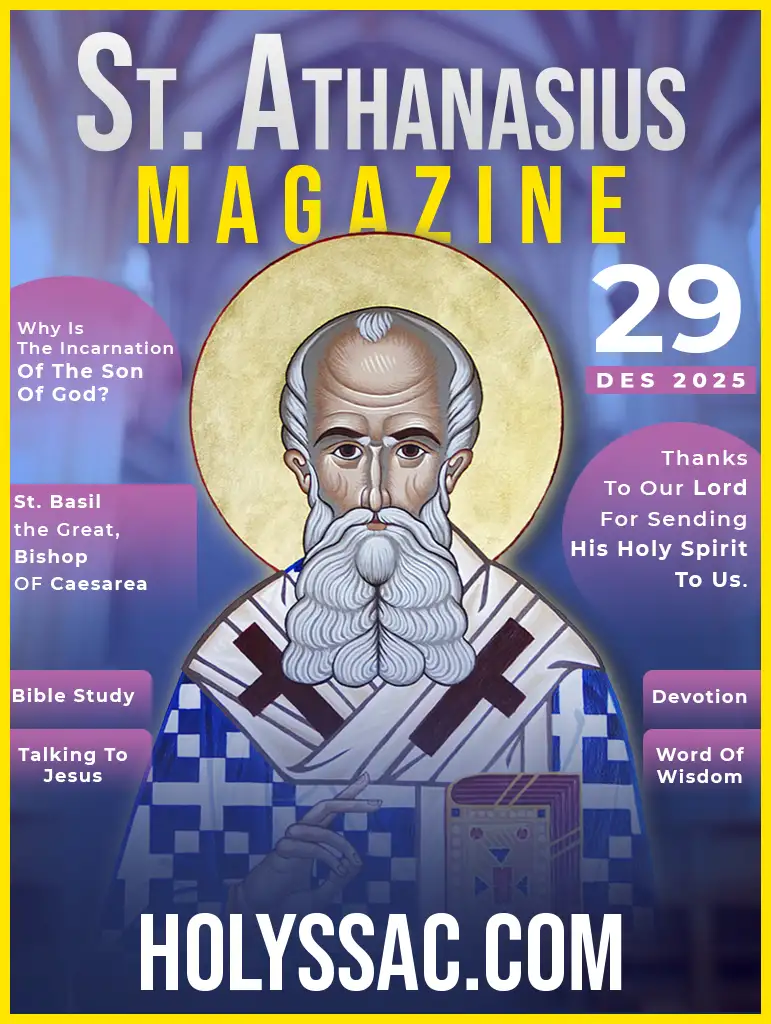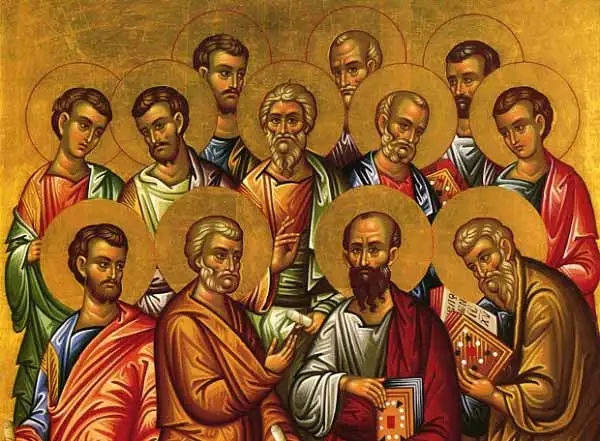
IT WAS THE INFLUENCE OF HIS PIOUS SISTER MACRINA THAT MADE HIM CONFIRM HIS EARLIER INCLINATION TO THE ASCETIC LIFE
Basil was born of a distinguished family of Caesarea, the capital of Cappadocia, which was a province of Asia Minor of special importance in the 4th century due to its position on the military road between Constantinople and Antioch. The family had been Christian since the days of the persecutions of Christians, which ended early in the 4th century. One of Basil's uncles was a bishop, as later were two of his brothers Gregory and Peter of Sebaste. He received a literary education, however, which would have fitted him to follow in his father's footsteps as lawyer and orator. He studied at Caesarea and Constantinople and, finally, at Athens, where he developed his friendship with St. Gregory of Nazianzus. On returning home he began a secular career, but the influence of his pious sister Macrina, later a nun and abbess, confirmed his earlier inclination to the ascetic life. With a group of friends, he established a monastic settlement on the family estate at Annesi in Pontus.
In 357 he made an extensive tour of the monasteries of Egypt, and in 360 he assisted the Cappadocian bishops at a synod at Constantinople. He had been distressed by the general acceptance of the Arian Creed of the Council of Ariminum the previous year and especially by the fact that his own bishop, Dianius of Caesarea, had supported it. Shortly before the death of Dianius (362), Basil was reconciled to him and later was ordained priest to assist Dianius's successor, the new convert Eusebius. Basil's abilities and prestige, as well as Eusebius's dislike of asceticism, led to tension between them, and Basil withdrew to Annesi.
In 365 he was called back to Caesarea, when the church was threatened by the Arian emperor Valens. His theological and ecclesiastical policy thereafter aimed to unite against Arianism the former semi-Arians and the supporters of Nicaea under the formula " three persons" (hypostases) in one substance (ousia)," thus preserving both unity and the necessary distinctions in the theological concept of the Godhead. On Eusebius's death in 370, Basil became his successor, although he was opposed by some of the other bishops in the province.
As bishop of Caesarea, Basil was metropolitan (ecclesiastical primate of a province) of Cappadocia, and his own diocese covered the great estates of eastern Cappadocia, where he was assisted by a number of "country bishops" (chorepiscopi). He also founded charitable institutions to aid the poor, the ill, and travelers. When Valens passed through Caesarea.
In 371, Basil dramatically defied his demand for submission. But in 372 Valens divided the province, and Basil considered this a personal attack, since Anthimus of Tyana thus became metropolitan for the cities of western Cappadocia. Basil countered by installing supporters in some of the border towns St. Gregory of Nazianzus at Sasima and his own brother St. Gregory at Nyssa. This tactic was only partially successful, but Basil escaped the attacks that Valens launched on orthodox bishops elsewhere. Meanwhile, Basil tried to secure general support for the former semi-Arian St. Meletius as bishop of Antioch (one of the five major patriarchates of the early church) against Paulinus, the leader of the strict Nicene minority, since he feared that the extreme Nicenes at this point were lapsing into Sabellianism, a heresy exaggerating the oneness of God. During Basil's lifetime, however, this was prevented by the recognition of Paulinus by the bishops of Alexandria and in spite of a series of negotiations after 375 by Pope Damascus I. Basil's health was poor, perhaps because of the rigors of his ascetic life. He died soon after Valens's death in the Battle of Adrianoples had opened the way for the victory of Basil's cause. Vigorous and firm and sure of his own position, in his own time he seems to have been admired rather than loved, even by his intimates. But he was widely mourned and was soon numbered among the saints.
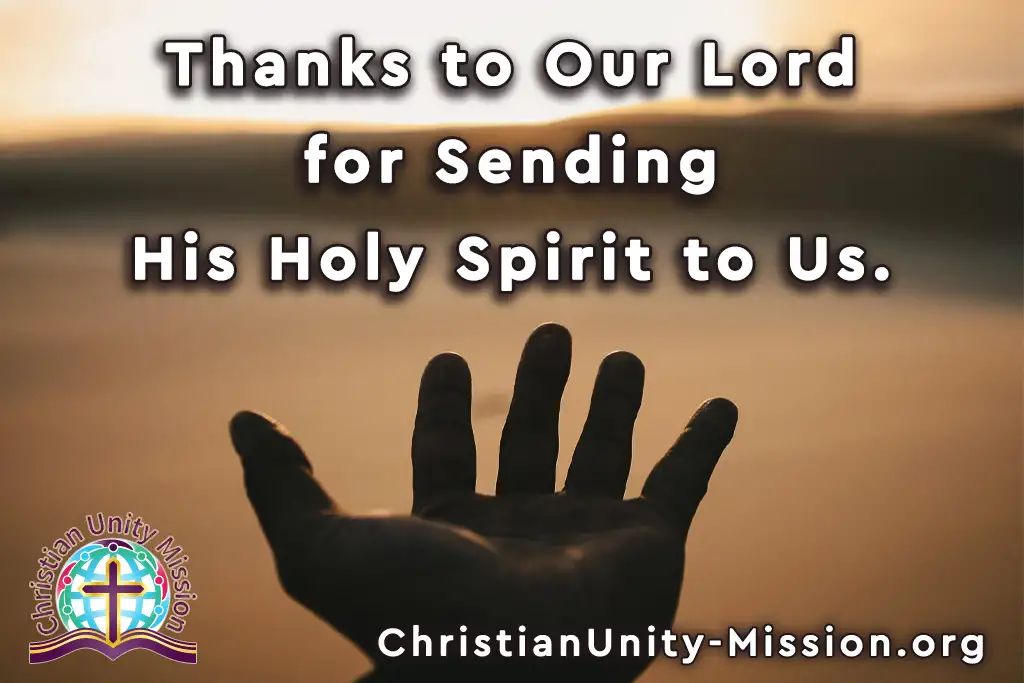
“And I will pray to the Father, and He will give you another Helper, that He may abide with you forever.” (John 14:16).
Thankfully, we are not left alone in our struggle in this evil world. Jesus told His disciples that He will give us the Holy Spirit as our helper, teacher, and guide in all things. His presence in us will guide us in our daily lives, helps us to follow Christ authentically and gaining the power to resist the devil and his temptations. He helps us to be virtues toward others that are well beyond our natural human characteristics. And He helps us to demonstrate our love for God by obeying Him and following His commandments, which cultivates a healthy and robust harvest of precious spiritual fruit.
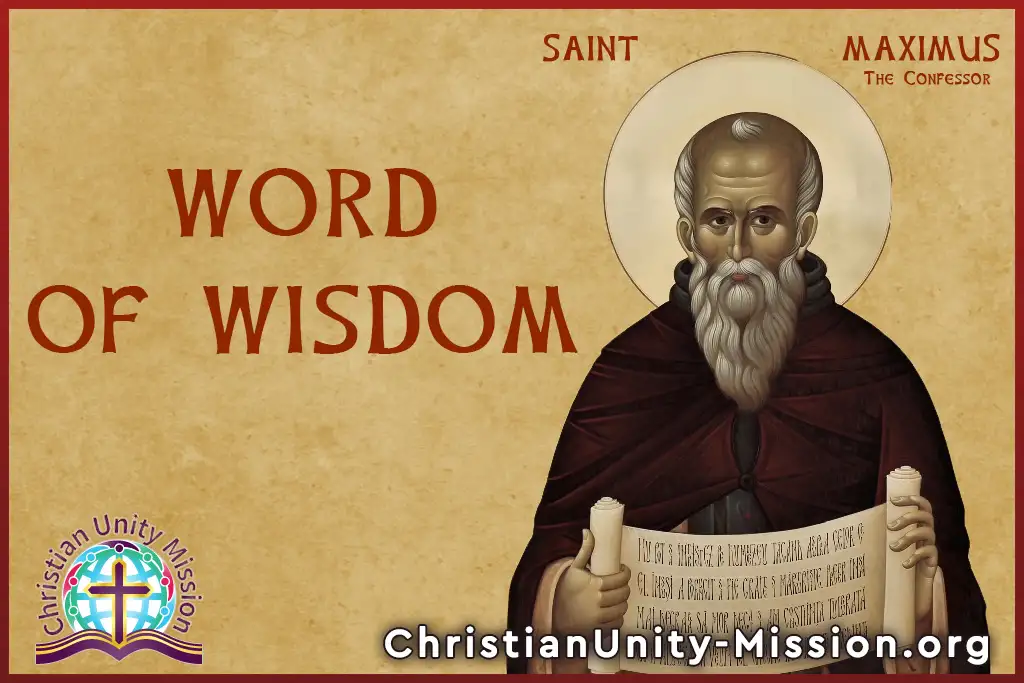
“Mystery hidden from the ages” (Col 1:26)
And from the nations is now revealed through the true and perfect incarnation of the Son and God. For He united our nature to himself in a single hypostasis, without division, and without confusion, and joined us to himself as a kind of first fruits. This holy flesh with its intellectual and rational soul came from us and is ours. He considered us worthy to be one and the same with himself according to his humanity.
-St. Maximus the Confessor, On the Cosmic Mystery of Jesus Christ
Jesus Christ came to our world having a flesh like ours to free us from the “law of sin and death.” St Paul in his epistle to the Romans chapter eight explained it clearly “There is therefore now no condemnation for those who are in Christ Jesus, who walk not according to the flesh, but according to the Spirit. For the law of the Spirit of life in Christ Jesus has set me free from the law of sin and death” (Romans 8:1-2).
He also stated this law in chapter six, “For the wages of sin is death…” (Romans 6:23).
We are spiritually dead if we continue sinning. He made it so clear for us in Romans chapter eight so that we understand clearly why Jesus came to us. He came to set us free from the slavery of sin and death. So we must no longer have to fear death because we are now free from bondage to sin(1 Corinthians 15:55)!
Jesus said, “I tell you the truth, everyone who sins is a slave to sin” (John 8:34).
We must know that when we continue sinning and obeying the devil’s will in our life, he, the devil, will have a grip on our will and he will enslave us. Sin can become more powerful than our will to resist it. We will be slaves to him. St. Paul has pointed us to the solution to how to be free from the power of sin, “For we know that our old self was crucified with him so that the body of sin might be rendered powerless, that we should no longer be slaves to sin, because anyone who has died has been freed from sin” (Romans 6:6-7).
When we do not obey the will of the flesh, and obey the will of Jesus, our Lord and Savior, submitting and surrendering our life and our will to Him; we will have His power over sin and we will be set free.
Thanks to our God Father’s salvation plan to all mankind.
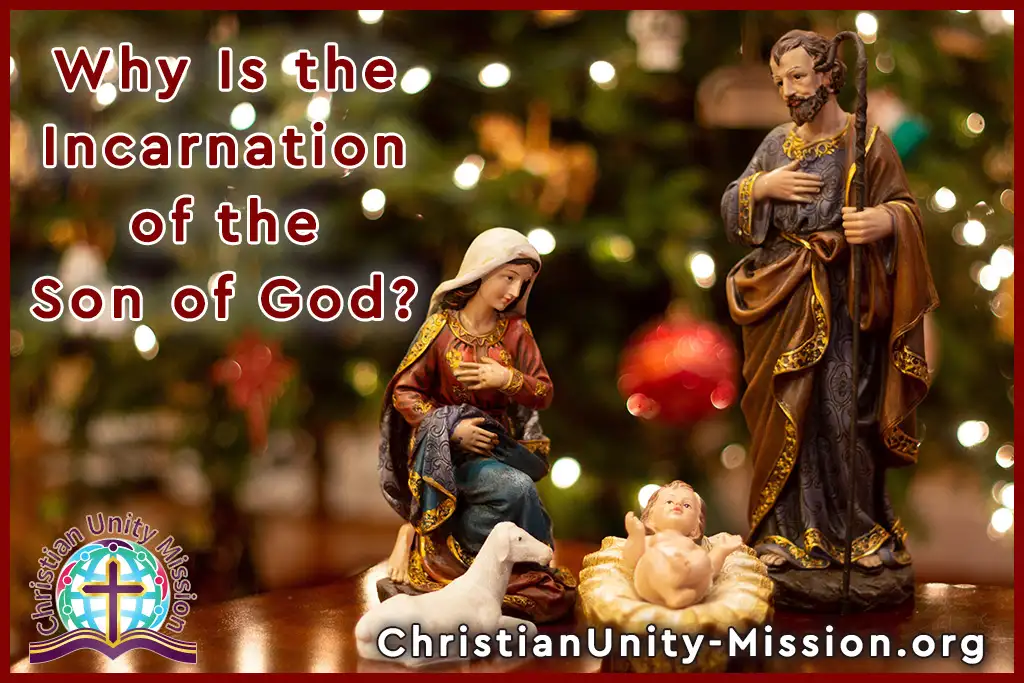
The Incarnation of the Son of God, Jesus Christ, is the mystery, which was in God’s Plan before the ages. It was the central act in this Divine Plan for mankind to become holy and made immortal through communion with the Incarnate Word of God, Jesus Christ. He became man because it was the Divine Plan and mystery before the ages to unite man with God and His life in Christ. Through Satan, the fallen angel, Adam and Eve the first humans were deceived by his thoughts and his evil knowledge that he transmitted to them. They lost the potentiality to attain perfection and immortality because they switched from contemplating the life of God to engaging in self-desires and lust. They brought themselves into a fallen world where they would receive death and would become alienated from God. His creation was wounded by Satan’s deception and was left spiritually and physically ill.
The Word of God came in His own Person, because it was He alone, the Image of the Father, Who could recreate man made after the Image. In order to effect this re-creation, however, He had first to do away with death and corruption. Therefore He assumed a human body, in order that in it death might once and for all be destroyed, and that men might be renewed according to the Image of God. Salvation, or "being saved," therefore, refers to this process of being saved from death and corruption and the fate of eternal death. There is nothing that a person can do to earn salvation. It is rather a gift from God. However, this gift of relationship has to be accepted by the believer, since God will not force salvation on humanity. Man is free to reject the gift of salvation continually offered by God. To be saved, man must work together with God in his entire being, including his will, effort and actions, are perfectly conformed with, and united to, His eternal life.
God becomes powerless before human freedom; He cannot violate it since it flows from His own omnipotence. Certainly man was created by the will of God alone; but he cannot be made holy by Him alone. A single will to raise up the image, but two to make the image into a likeness. The love of God for man is so great that it cannot constrain, for there is no love without respect. The ultimate goal of a Christian is to be in union with God. Salvation therefore is not merely an escape from the eternal bondage of death, but an entrance to participate in Christ’s eternal life.
Lord,
Help me to forever remember what a gift it is to sit with you the creator of the whole universe and talk to you. Thank you for loving me and for your good care to me every day. I pray that I’ll be able to draw nearer & nearer to you & give thanks for everything you do in my life. Lord, give me the desire & the ability to focus on you. I come to you now asking your help to do this. I confess that I’ve been lazy & so distracted lately. I want to renew my commitment to spending more time with you & leaning on you every day. I pray you renew a passion in me to sit with you more & talk to you. Help me to recognize the stirring in my heart when you want to talk to me and to direct me. Help me to have the clarity to hear your voice.
In Jesus’ Name I pray.
Amen
• St. Paul who was appointed a preacher, an apostle, and a teacher of the non-believers teaches us:
IN FAITH & TRUTH to:
• FOR WHAT
For this is good and acceptable in the sight of God our Savior,
WHO desires all men to be SAVED and to COME to the knowledge of the truth.
• There is one God and one Mediator between God and men,
WHO IS HE
The Man Christ Jesus & WHO gave Himself a ransom for ALL.
• St Paul desires that
1- Men PRAY everywhere,
2- LIFTING UP HOLY hands,
3- Without WRATH and DOUBTING.
• In like manner also, that :
1- Women ADORN themselves in MODEST APPAREL,
2- With PROPRIETY and MODERATION.